For Dementia & Cognitive Health
Strength training benefits for brain health — backed by neuroscience research.
Cognitive Benefits
Resistance training is shown to improve memory, executive function, and neuroprotection — key factors in slowing cognitive decline.
Safe & Supervised
Every session is coached one-on-one with controlled movements — safe and effective for clients at any cognitive level.
Korebalance™ Neuro-Training
Computerized balance and neurocognitive training improves proprioception, reaction time, and overall brain-body coordination.
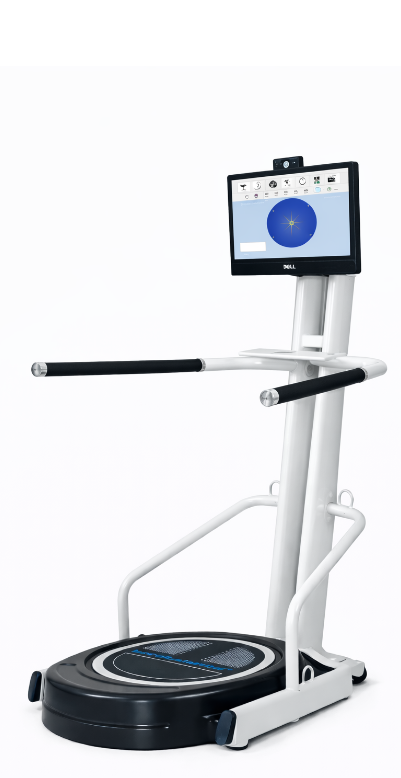
Korebalance® Balance Training System
A medical-grade assessment and training system that challenges all three balance systems — visual, vestibular, and proprioceptive — through interactive tasks on a dynamic platform.
Because the tasks pair movement with real-time decision making, sessions train reaction time and brain-body coordination, not just muscle. Platform stability is precisely adjustable, and objective reports track change over time.
See the full equipment lineupNautilus One™ Strength Circuit
The strength side of the session runs on cam-based Nautilus One machines with guided movement paths. Nothing is balanced overhead, nothing is dropped, and the trainer sets every position — which is what makes hard training appropriate for clients at any cognitive level.
The whole circuit takes 20 minutes, once a week, which keeps the routine easy to sustain.
See the full equipment lineup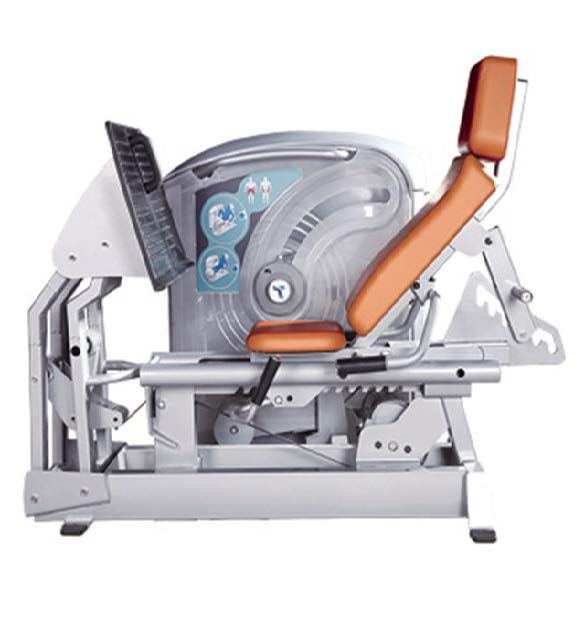
How sessions stay safe and simple
One-on-one coaching
A trainer sets up every machine and guides every repetition, so nothing depends on remembering a routine.
Simple, repeatable protocol
The same short circuit each week builds familiarity and confidence instead of cognitive load.
Slow, controlled movement
No momentum, no free weights overhead, no balance-dependent lifts — the session stays predictable and low-risk.
Adjustable balance challenge
The Korebalance platform's stability is precisely tunable, so the neurocognitive challenge can be scaled to any ability level.
The research behind brain-health training
Peer-reviewed evidence on resistance training, executive function, healthy aging, mood, and sleep.
Cognitive Health & Executive Function
Research on resistance training, executive function, and neuroprotection in older adults, including 12-month randomized controlled trial evidence.
Read the evidenceOlder Adults, Sarcopenia & Functional Capacity
Systematic reviews and RCTs on resistance training in older and very elderly adults: sarcopenia, quality of life, grip strength, and long-term retention of gains.
Read the evidenceHealthy Aging & Longevity
Studies on resistance exercise and biological aging: skeletal muscle gene expression reversal, muscle mass as a longevity predictor, and skin aging markers.
Read the evidenceMental Health, Depression & Anxiety
Meta-analyses of randomized clinical trials on resistance exercise training and depressive symptoms, anxiety, and body image in midlife and older adults.
Read the evidenceSleep Quality
Systematic review of randomized controlled trials examining the effect of resistance exercise on sleep quality and sleep architecture.
Read the evidenceBalance & Fall Prevention
Systematic reviews and meta-analyses on resistance exercise, balance ability, and fall prevention efficacy in older adults.
Read the evidence