For Dentists & Surgeons
Specialty neck and lower-back equipment, paired with slow, supervised protocols that protect the hands, spine, and joints you rely on every day.
Joint-Safe Training
Protect the hands and wrists you depend on. Our slow-motion protocol eliminates jerky, high-impact movements that risk injury.
20-Minute Sessions
Fit a full-body workout into your demanding schedule. Once a week is all you need for measurable strength gains.
Private, Professional Setting
Train in a private studio — no waiting for equipment, no distractions, just focused coaching.
Why the neck and low back give out first
Clinical work is a posture problem before it is a fitness problem. Chairside dentistry, microscope and loupe work, and long procedures hold the head forward and down for hours. The cervical extensors — the muscles that hold your head upright — spend that time under low-grade static load with no opportunity to contract through a full range or recover.
The lumbar spine has the same story from the other direction: prolonged standing, leaning, and rotation while the pelvis stays fixed. Over years, the deep lumbar erector spinae become deconditioned, and the surrounding hips and glutes quietly take over the work they should be sharing.
General gym training rarely touches either group directly. Isolating and strengthening them requires equipment that restrains everything else — which is exactly what our two Nautilus One spinal machines were built to do.
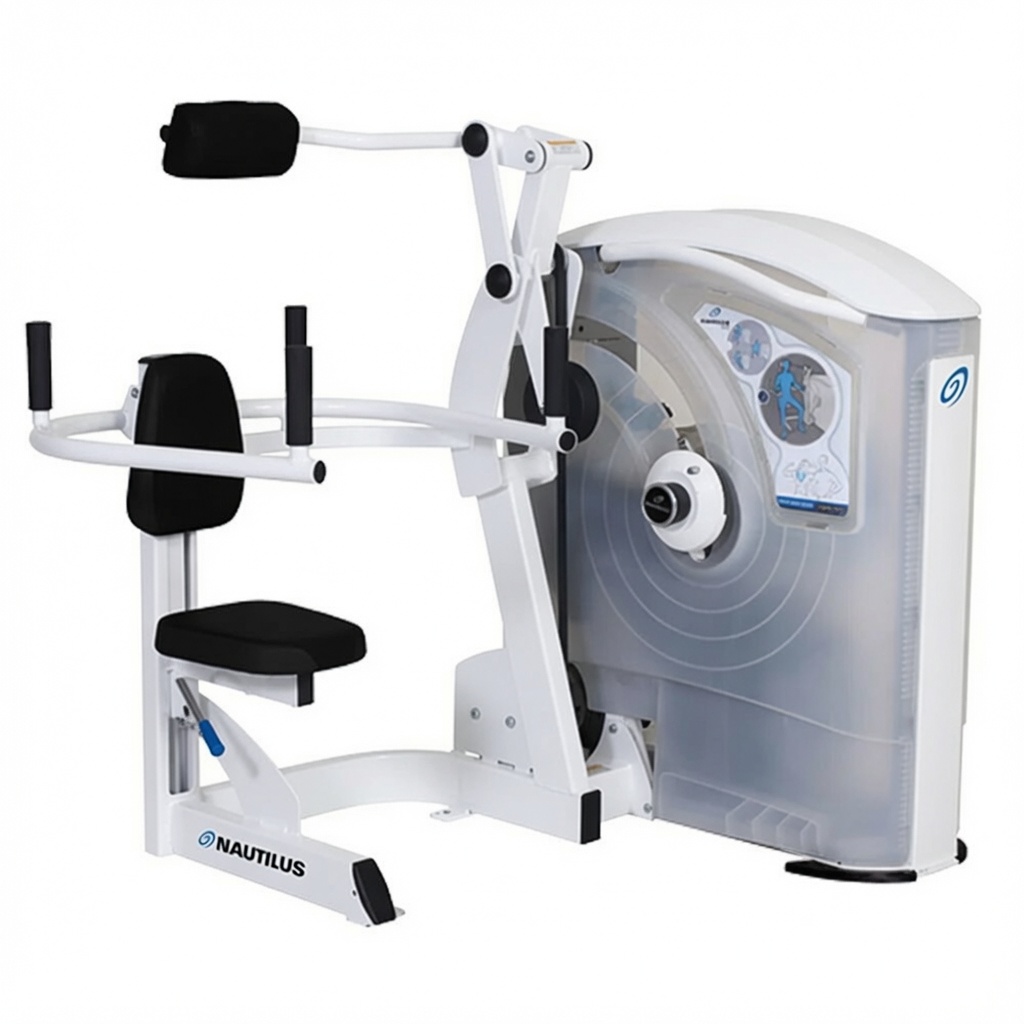
Nautilus One Cervical Neck Machine
Built for professionals with chronic neck pain from prolonged forward-head posture. It safely isolates and strengthens the cervical extensors through a controlled, full range of motion, using a contoured head pad and a stabilizing torso restraint so the shoulders and upper back can't compensate.
Nautilus's weight-stack cam resistance matches the cervical spine's natural strength curve — smooth, joint-friendly loading that stays tolerable even for people already experiencing pain or stiffness.
- Isolates the cervical extensors with precision
- Addresses chronic neck pain and forward-head posture
- Smooth cam resistance for pain-sensitive users
- Range of motion limited to your comfortable arc
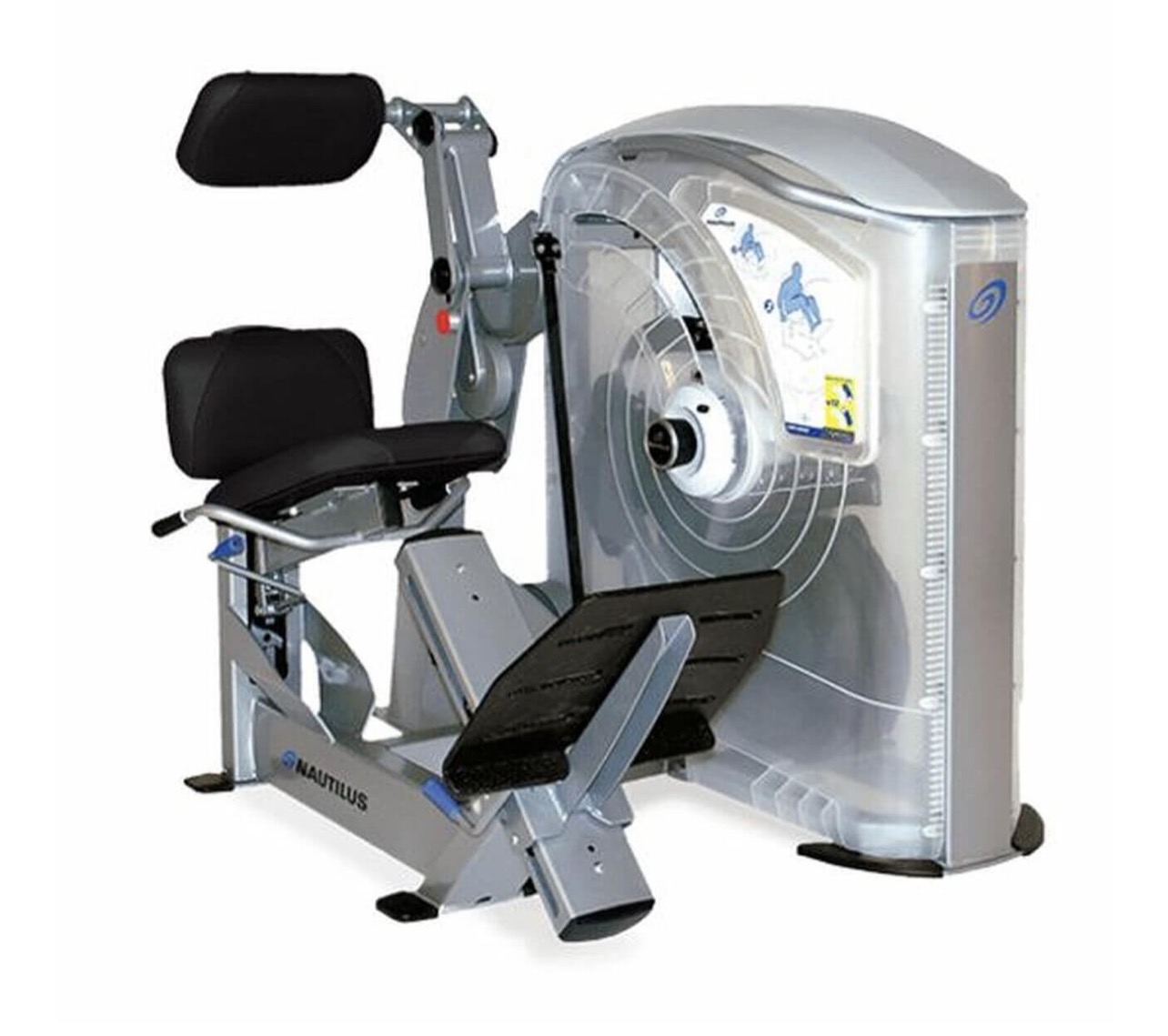
Nautilus One Lower Back Machine
A pelvic-stabilized lumbar extension machine that isolates the lumbar erector spinae — the deep muscles most responsible for spinal support and the ones most commonly deconditioned in people with chronic low-back pain.
A femur restraint and seat belt lock the pelvis so the hips and glutes can't take over, meaning every rep loads the lumbar spine directly through a controlled, protected range of motion.
- Pelvic restraint isolates the lumbar extensors
- Supports chronic low-back pain protocols
- Strengthens the spine's primary stabilizers
- Controlled range with smooth cam loading
How we minimize injury risk
Your hands, wrists, neck, and spine are your livelihood. Every element of the protocol is chosen to load muscle hard while keeping stress off the joints and connective tissue.
Slow, controlled tempo
Every repetition is performed slowly under continuous tension. There is no momentum, no bouncing, and no ballistic loading — the forces that cause most strength-training injuries.
Fixed, guided movement paths
Machine-based training keeps the neck, spine, shoulders, and wrists moving on a path the equipment defines, so form does not break down as you fatigue.
One-on-one supervision
A trainer sets your seat, restraints, and range of motion on every machine and stays with you for the entire session — nothing is left to guesswork.
Measured progression
Resistance only increases when your time-under-load targets are met, so load advances at the rate your tissue can adapt to.
Recovery built in
20 minutes once a week means connective tissue and joints get full recovery between sessions — critical when your hands and back are also working all week.
Pain-aware range of motion
Range can be limited on any machine, so people already dealing with neck or low-back symptoms can train within a comfortable, protected arc.
The research behind the protocol
Peer-reviewed evidence on posture, supervised resistance training, injury risk, and time-efficient protocols — summarized and linked for clinicians.
Posture, Range of Motion & Musculoskeletal Pain
Research on resistance training for range of motion improvement, posture correction, and reduction of musculoskeletal pain.
Read the evidenceTraining Environment & Injury Risk
Emergency department and epidemiologic data on injuries sustained at fitness facilities and in aerobic fitness classes.
Read the evidenceSupervision & Coaching Effects
Studies comparing supervised and unsupervised resistance training on strength, balance, effort, and adherence outcomes.
Read the evidenceTime Efficiency & Minimum Effective Dose
Research and press coverage on how little strength training is needed to build strength — express weight training and minimum weekly dose findings.
Read the evidenceStrength & Muscular Hypertrophy
Evidence-based resistance training recommendations for strength and muscular hypertrophy, including training frequency, range of motion, and training to failure.
Read the evidenceAthletic Performance & Injury Prevention
Meta-analytic evidence on strength training as dose-dependent prevention of acute and overuse sports injuries, plus concurrent training and running performance.
Read the evidence